What if your home doesn’t need a makeover-just a better mood?
Comfort isn’t about expensive furniture, designer paint, or a full renovation. It often comes from small, affordable changes that make a room feel warmer, softer, calmer, and more personal.
With the right lighting, textures, layout, scents, and clutter control, even a tight budget can make your space feel noticeably more inviting.
This guide shares practical ways to make your home feel more comfortable without overspending-so every room feels easier to live in, relax in, and enjoy.
What Makes a Home Feel Comfortable Without Spending More Money
A comfortable home is not always about buying new furniture, hiring an interior design service, or upgrading expensive appliances. Often, it comes down to how well your space supports daily life: better lighting, easier movement, cleaner surfaces, and rooms that feel calm instead of crowded.
Start with what you already own. Move a chair closer to natural light, clear the kitchen counter, or place a lamp where you actually read at night. In real homes, I’ve seen a living room feel noticeably warmer simply by pulling furniture away from the walls and grouping seating around one central area.
- Control light: Open curtains during the day and use softer lamps in the evening to reduce harsh overhead lighting.
- Improve airflow: Clean vents, open interior doors, and use ceiling fans correctly before considering HVAC upgrades.
- Reduce visual noise: Put away loose cables, paperwork, and unused decor so the room feels more spacious.
Free organization tools can also help. A simple checklist in Google Keep can track small home maintenance tasks like changing air filters, testing smoke detectors, or rotating bedding. These little habits protect comfort, safety, and even energy efficiency without adding new monthly costs.
The biggest benefit is control. When your home is easier to clean, better lit, and arranged around how you actually live, it feels more comfortable before you spend a single dollar on home improvement products or smart home devices.
Low-Cost Ways to Add Warmth Through Lighting, Textiles, Layout, and Scent
Warmth at home is often less about expensive renovation and more about how the room feels at eye level. Start with lighting: replace harsh white bulbs with warm LED bulbs around 2700K, add a floor lamp in dark corners, and use smart plugs or affordable smart bulbs from Philips Hue or similar brands to control brightness without rewiring. This small home improvement upgrade can make a rental apartment or budget living room feel softer in one evening.
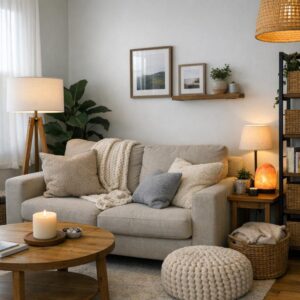
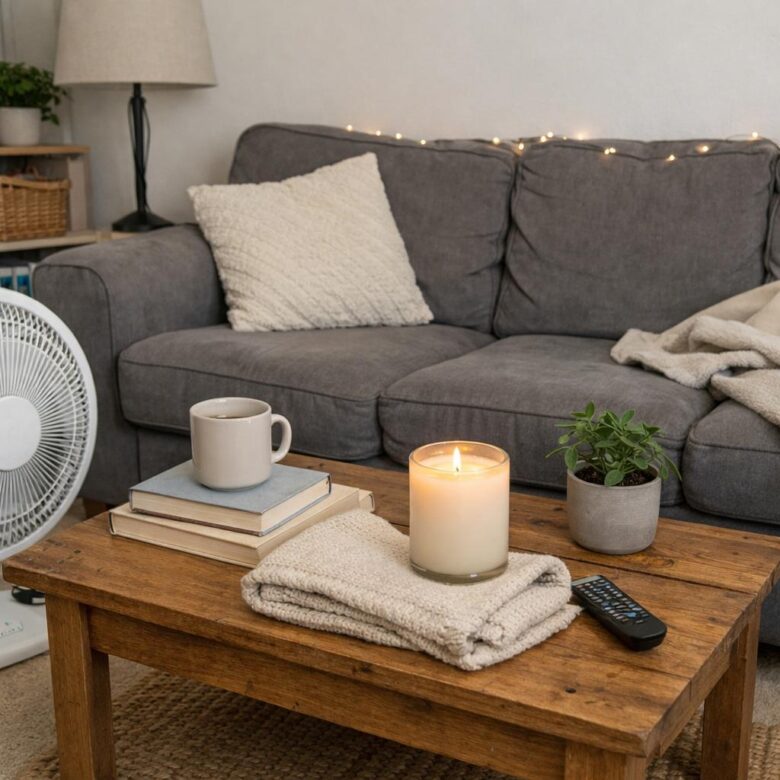
Textiles are the fastest way to make a space feel comfortable on a budget. Layer a washable area rug over cold flooring, add cushion covers in boucle, cotton, or velvet, and place a throw blanket where people naturally sit. In real homes, I’ve seen a plain gray sofa look completely different with two warm-toned pillows, a textured blanket, and a $30 rug placed under the coffee table.
- Lighting: Use warm LED bulbs, table lamps, dimmers, or plug-in wall sconces for a cozy interior design effect.
- Layout: Pull furniture slightly away from walls and angle chairs toward each other to create a conversation zone.
- Scent: Choose soy candles, reed diffusers, or essential oil diffusers in vanilla, cedar, amber, or linen scents.
For scent, keep it subtle because overpowering fragrance can make a room feel cheaper, not warmer. A good rule is one scent source per room, placed near an entryway or side table rather than beside seating. If you shop at IKEA, Target, or HomeGoods, compare texture, bulb color temperature, and diffuser refills before buying-the best value usually comes from items you can reuse across seasons.
Common Budget Comfort Mistakes That Make Your Home Feel Cluttered or Cold
One common mistake is buying cheap décor before fixing the real comfort problem. A room may not need more pillows or wall art; it may need better lighting, a draft stopper, an area rug, or a basic home energy audit. I’ve seen renters spend money on decorative baskets while cold air was coming through an unsealed balcony door.
Another issue is relying on overhead lighting only. Bright ceiling lights can make even a clean room feel harsh and unfinished, especially at night. A low-cost floor lamp, warm LED bulbs, or a dimmer switch from Home Depot can make the space feel softer without a full electrical upgrade.
- Buying storage without decluttering: More bins can turn into organized clutter if you do not remove unused items first.
- Ignoring HVAC filters: A dirty filter can reduce airflow, make rooms feel stuffy, and increase heating and cooling costs.
- Choosing style over texture: Smooth surfaces everywhere can feel cold; add washable curtains, rugs, throws, or fabric seating.
Be careful with “budget” furniture that is uncomfortable from day one. A cheap sofa with poor support often costs more long term because you replace it sooner or avoid using the room. If money is tight, consider secondhand solid wood furniture, washable slipcovers, and small comfort upgrades like a mattress topper or air purifier before buying trendy pieces.
The goal is not to fill every corner. A comfortable home usually feels warm, breathable, and easy to maintain.
Closing Recommendations
Making a home feel comfortable on a budget is less about buying more and more about choosing intentionally. Start with the changes that affect daily life most: better lighting, softer textures, less clutter, and a layout that supports how you actually live.
The smartest approach is to improve one area at a time rather than chasing a perfect makeover. If a change makes your space easier to relax in, easier to use, or more pleasant to return to, it is worth doing. Comfort grows through small, thoughtful choices-and those often cost far less than a full renovation.

Dr. Everett Halloway is a Doctor of Design (DDes) and a sustainable technology consultant. He specializes in the integration of smart home ecosystems with human-centric wellness, focusing on how automated environments can reduce stress and enhance daily vitality. Through his research, he provides actionable insights for creating modern living spaces that are both technologically advanced and deeply restorative.