Is your kitchen making you work harder than you need to?
When every drawer is crowded and every cabinet hides a surprise, cooking turns into a daily search mission. Smart storage changes that by putting the right tools, ingredients, and prep items exactly where you need them.
The best kitchen storage ideas do more than save space-they save steps, minutes, and mental energy. From vertical organizers to pull-out shelves and hidden zones, small upgrades can make even a compact kitchen feel faster and more functional.
This guide focuses on practical, space-saving solutions that help you cook, clean, and move through your kitchen with less friction.
What Makes Kitchen Storage “Smart”: Space-Saving Principles That Improve Daily Workflow
Smart kitchen storage is not just about buying more bins; it is about placing everyday items where your hands naturally reach. A good system reduces wasted movement, keeps counters clear, and makes cooking feel less chaotic, especially in small kitchen design or apartment kitchens where every inch has a cost.
The most effective space-saving kitchen storage follows three practical principles:
- Store by task: Keep knives, cutting boards, and mixing bowls near the prep zone, not scattered across separate cabinets.
- Use vertical space: Add stackable shelves, wall-mounted racks, or pull-out cabinet organizers to turn unused height into usable storage.
- Make items visible: Clear containers, drawer dividers, and labeled pantry bins prevent duplicate purchases and save time during meal prep.
In real homes, the biggest workflow problem is often the “deep cabinet trap.” For example, a lower cabinet packed with pots may look full but function poorly because the pan you need is always at the back. A pull-out organizer from IKEA or a soft-close slide-out shelf can make that same cabinet faster to use without a full kitchen remodel.
Think of smart storage as a small home improvement investment: the right kitchen organization tools can improve convenience, reduce clutter, and help protect cookware from scratches. Before buying anything, measure cabinet depth, door clearance, and shelf height. That simple step prevents wasted money and helps you choose storage solutions that actually fit your daily routine.
How to Organize Cabinets, Drawers, Pantry Zones, and Countertops for Faster Meal Prep
Set up your kitchen by task, not by category alone. Keep cutting boards, knives, mixing bowls, meal prep containers, and measuring tools near the main prep area so you are not crossing the kitchen for every step.
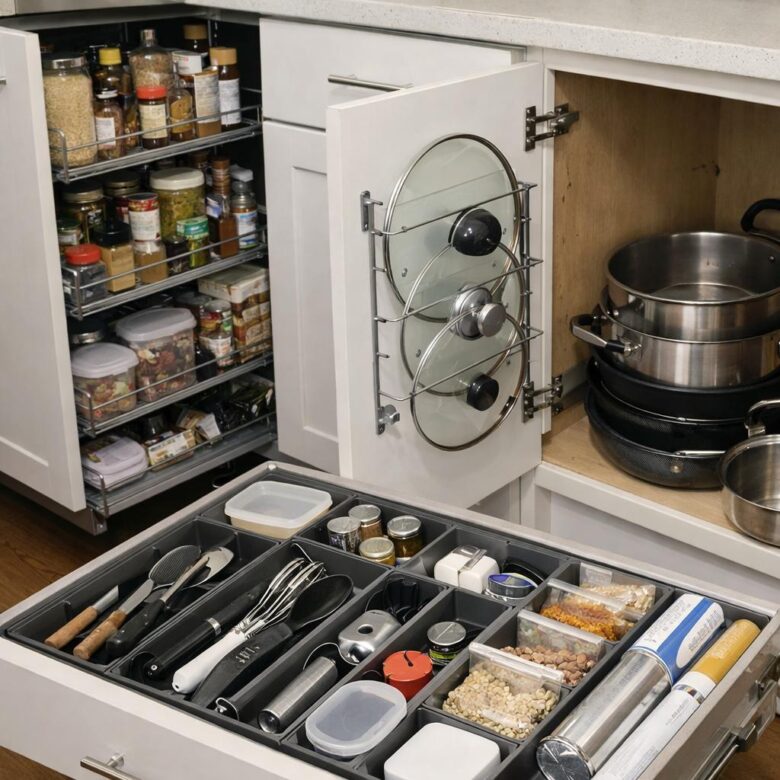
Cabinets work best when heavy cookware stays low and everyday items stay at eye level. A pull-out kitchen cabinet organizer, tiered shelf riser, or lazy Susan can make deep cabinets more usable, especially in small kitchens where custom cabinetry or a full kitchen remodel is not in the budget.
- Drawers: Use adjustable drawer dividers for utensils, spice packets, wraps, and food storage lids.
- Pantry zones: Group breakfast, baking, snacks, canned goods, and quick dinners in separate labeled bins.
- Countertops: Keep only daily-use appliances out, such as the coffee maker, toaster, or air fryer.
A real-world setup I’ve seen work well is a “weeknight dinner zone” with pasta, rice, sauces, canned beans, and seasonings stored together in clear pantry bins. It cuts down on searching and also makes grocery planning easier because you can see what needs replacing.
For tools, The Container Store has practical pantry storage systems, but budget options from IKEA or Target can work just as well if you measure first. The key is choosing organizers that fit your actual cooking habits, not buying matching bins that look good but waste space.
Common Kitchen Storage Mistakes That Waste Space-and How to Fix Them
One of the biggest kitchen storage mistakes is treating every cabinet like a deep box. Items get pushed to the back, duplicates pile up, and you end up buying another jar of cumin because the first one disappeared behind the pasta. A better fix is to use pull-out shelves, tiered pantry storage containers, or cabinet organizers that let you see everything at once.
Another common issue is wasting vertical space. In real homes, I often see tall shelves holding one short stack of plates, while mugs and small appliances crowd the countertop. Add shelf risers, wall-mounted racks, or adjustable dividers before considering expensive kitchen remodeling services.
- Overstuffed drawers: Use drawer dividers for utensils, food wrap, and measuring tools so every item has a clear zone.
- Messy under-sink areas: Install a sliding under-sink organizer to separate cleaning supplies, trash bags, and dishwasher tablets.
- Unused cabinet doors: Add slim racks for cutting boards, lids, spices, or foil rolls.
A simple example: if baking trays are stacked flat, you have to lift the whole pile every time. Storing them vertically with a file-style rack saves time and prevents scratches. It is a small upgrade with a noticeable daily benefit.
Before buying storage products, measure your cabinets and test layouts with a tool like IKEA Kitchen Planner. This helps you compare organizer sizes, estimate cost, and avoid purchasing bins or pull-out systems that do not actually fit your kitchen.
Final Thoughts on Smart Kitchen Storage Ideas That Save Space and Time
Smart kitchen storage works best when every choice supports how you actually cook, clean, and move. Instead of adding more containers or gadgets, start by identifying what slows you down most: cluttered counters, deep cabinets, crowded drawers, or hard-to-reach essentials.
- Choose solutions that make daily items visible and easy to return.
- Prioritize adjustable, vertical, and pull-out storage for long-term flexibility.
- Invest only where it improves access, saves time, or reduces mess.
The right storage system should feel effortless, not complicated-turning your kitchen into a space that stays organized because it is simple to use.

Dr. Everett Halloway is a Doctor of Design (DDes) and a sustainable technology consultant. He specializes in the integration of smart home ecosystems with human-centric wellness, focusing on how automated environments can reduce stress and enhance daily vitality. Through his research, he provides actionable insights for creating modern living spaces that are both technologically advanced and deeply restorative.